
UV Damage Collagen Breakdown: 5 Science-Backed Prevention Tips
UV damage collagen breakdown is a major contributor to visible skin aging. Sun exposure can affect the skin long after a tan fades, as repeated ultraviolet (UV) exposure can weaken collagen, the structural protein that helps skin stay firm, smooth, and resilient. As collagen support declines, fine lines may become more noticeable, texture can change, and skin may appear thinner or less elastic.
At Diamond District Aesthetics NYC, we often speak with patients who are surprised by how much of what they associate with “aging” can be related to cumulative sun exposure. Understanding the science behind UV damage can help you make more informed choices about prevention, maintenance, and treatment. While you cannot stop the natural aging process, consistent sun protection and appropriate skincare can help reduce avoidable damage and support healthier-looking skin over time.
What UV Exposure Does to the Skin?
Ultraviolet radiation from the sun is generally divided into UVA and UVB. Both contribute to skin damage, but they affect skin in slightly different ways.
UVA rays penetrate more deeply into the skin and are strongly linked to photoaging. They generate reactive oxygen species, which create oxidative stress and disrupt the skin’s repair systems. UVB rays are more associated with surface-level damage, including sunburn, inflammation, and direct DNA injury.
Together, these rays trigger a chain reaction that weakens collagen, affects elastin, and accelerates the visual signs of aging. This process is often called photoaging, and it is different from the natural aging that happens over time. In many patients, the effects of UV exposure are more visible than chronological aging itself.
How UV Damage Breaks Down Collagen?
Collagen provides the scaffold that helps skin remain supple and lifted. UV exposure damages that scaffold in several ways.
First, UV light increases the activity of enzymes called matrix metalloproteinases, or MMPs. These enzymes break down collagen fibers. In small amounts, this is part of normal tissue remodeling. Under repeated UV stress, however, MMPs become overactive and contribute to collagen depletion.
Second, UV radiation creates oxidative stress that interferes with fibroblasts, the cells responsible for producing new collagen. When fibroblasts are impaired, the skin’s ability to rebuild weakens. Over time, this can slow repair and worsen the appearance of fine lines.
Third, UV exposure can inflame skin tissue and impair the extracellular matrix, which is the framework that supports firmness and elasticity. The result is not just surface dryness. It is a deeper structural change that influences texture, tone, and overall skin quality.
This is why UV damage collagen breakdown is such an important concept. The visible signs are only part of the story. Underneath, the skin is losing the supportive network that keeps it looking healthy.
What Sun Damage Skin Aging Looks Like?
Sun damage skin aging often appears gradually, which is why many people do not notice it right away. Common signs include:
These changes often show up on the face, neck, chest, and hands, since these areas receive frequent UV exposure. Patients in NYC are often especially aware of the contrast between indoor professional life and outdoor commuting, which can lead to more cumulative exposure than expected.
Why Prevention Matters More Than Correction?
One of the most important truths in skin health is that prevention is easier than repair. Once collagen has been broken down, rebuilding it is possible to some extent, but results are usually gradual and depend on the degree of damage.
Prevention matters because collagen loss accumulates. Small amounts of daily exposure can add up over years. Even incidental exposure, such as walking to work, sitting near windows, or eating outdoors, can contribute to photoaging if skin is not protected consistently.
For patients who want to preserve skin quality long term, prevention is not optional. It is the foundation.
Science-Backed Ways to Protect Collagen
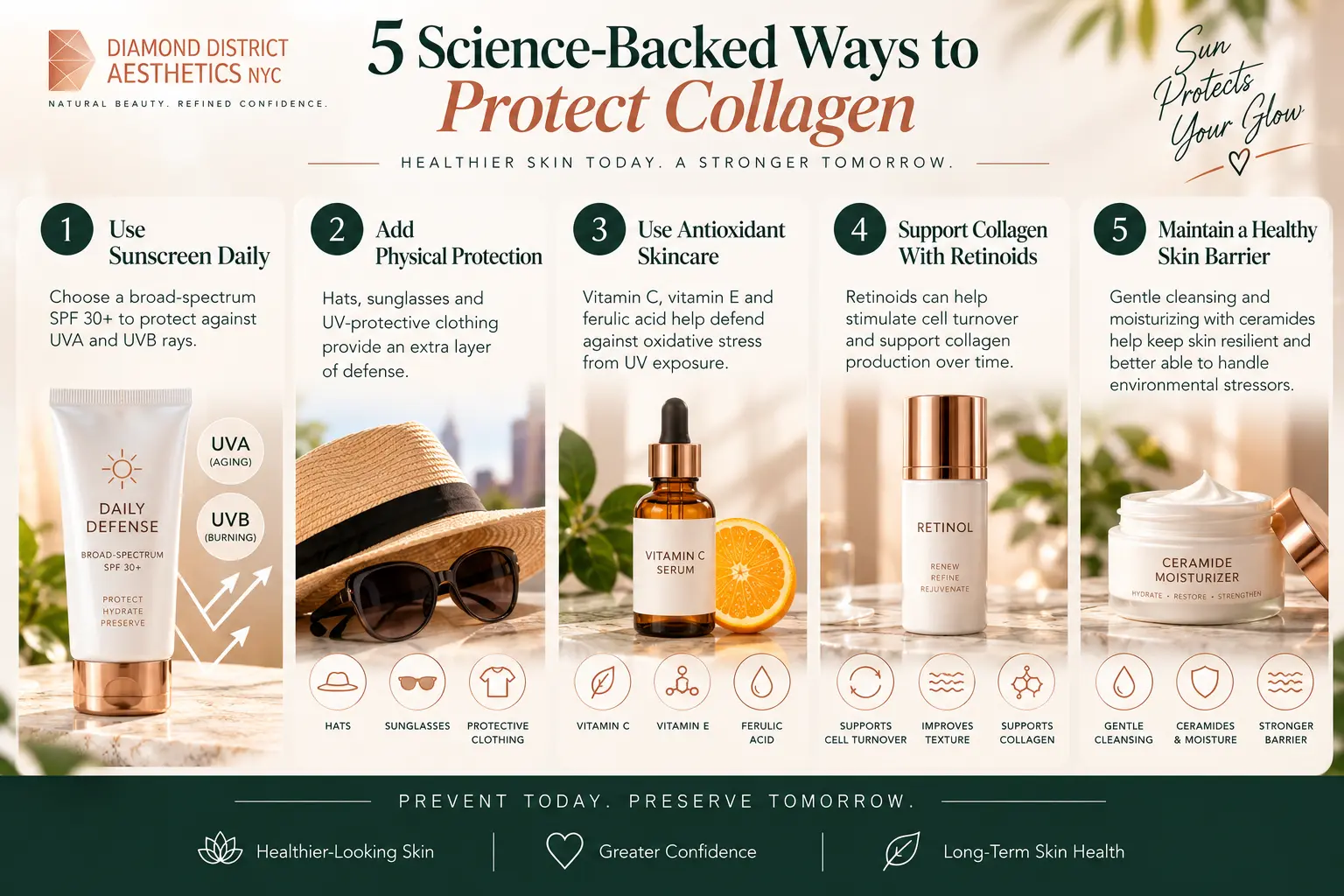
1. Use Broad-Spectrum Sunscreen Daily
Broad-spectrum sunscreen helps protect against both UVA and UVB rays. For collagen preservation, this is one of the most important habits you can build.
A sunscreen with SPF 30 or higher is commonly recommended for daily use. It should be applied generously and reapplied when spending extended time outdoors. If you use makeup, tinted mineral formulas can be a practical option for daily wear.
Sunscreen works best when paired with other protective habits, not used as the only defense.
2. Add Physical Protection
Hats, sunglasses, and UV-protective clothing provide an additional layer of defense. These measures are especially helpful in summer months, at high noon, and during prolonged outdoor activity.
For many patients, physical protection is the most underrated strategy because it reduces reliance on perfect sunscreen reapplication. In a city like New York, where daily routines are busy, practical protection often works better than idealized routines that are hard to maintain.
3. Use Antioxidant Skincare
Topical antioxidants can help neutralize oxidative stress caused by UV exposure. Vitamin C, vitamin E, and ferulic acid are commonly used in well-formulated products to support skin defense.
Antioxidants do not replace sunscreen, but they can complement it. Many patients benefit from using an antioxidant serum in the morning under sunscreen, especially if they are concerned about dullness, discoloration, or early photoaging.
4. Support Collagen With Retinoids
Retinoids are among the most studied ingredients for skin aging. They can help stimulate cell turnover, improve texture, and support collagen production over time.
That said, retinoids can cause dryness, irritation, or sensitivity, especially when first introduced. They should be used thoughtfully and often in combination with barrier support. For patients who have significant sun damage, a clinician can help determine the right strength and frequency.
5. Stay Consistent With Skin Barrier Care
A healthy barrier helps skin better tolerate environmental stressors. Gentle cleansers, moisturizers with ceramides, and well-balanced routines can help prevent irritation that makes skin look more reactive or aged.
Barrier support does not directly stop collagen breakdown from UV exposure, but it creates a stronger environment for overall skin health and recovery.
Treatment Options for Existing Sun Damage
If you already see visible signs of photoaging, preventive care alone may not be enough. Treatment options can help improve skin quality, but they work differently and come with different levels of downtime, cost, and maintenance.
The best choice depends on your skin type, the severity of damage, and how much downtime you can realistically accommodate.
Prevention vs Correction: What Patients Should Know
Prevention is typically lower risk, more affordable over time, and easier to maintain. Correction can be effective, but it usually requires more time, more visits, or more recovery.
If your goal is to protect collagen before major damage develops, skincare and sun protection may be enough. If your concern is long-standing sun damage skin aging, in-office treatment may offer more visible improvement, though results vary.
Many patients do best with a combined approach: daily prevention plus periodic treatment. That approach is often more sustainable than relying on one procedure alone.
How to Choose the Right Option?
Age-Based Recommendations
In your 20s and early 30s, the focus should be on prevention. Daily sunscreen, antioxidants, and a consistent routine can make a meaningful difference over time.
In your 30s and 40s, many patients begin to notice earlier signs of photoaging. This is a good time to combine prevention with targeted corrective treatments if needed.
In your 50s and beyond, skin often benefits from a more customized strategy that includes both repair and maintenance. At this stage, collagen support may involve a combination of skincare, energy-based treatments, and careful at-home habits.
Comfort, Downtime, and Maintenance
If you prefer minimal downtime, topical treatment and preventive care are usually the easiest place to start. If you want more visible correction, procedures like microneedling or laser resurfacing may offer stronger results, but they often require more recovery.
Maintenance matters too. Some treatments require periodic sessions to sustain improvement, while skincare must be used consistently to remain effective.
| Option | Best For | Downtime | Maintenance | Typical Tradeoff |
|---|---|---|---|---|
| Sunscreen and antioxidant skincare | Prevention and long-term collagen protection | None | Daily | Requires consistency and discipline |
| Retinoids | Texture, early lines, collagen support | Minimal to moderate irritation | Ongoing | Can cause dryness or sensitivity |
| Microneedling | Mild to moderate collagen loss, texture concerns | Low to moderate | Series of treatments, then maintenance | Results are gradual |
| Chemical peels | Surface sun damage, discoloration | Low to moderate | Periodic sessions | May not address deeper collagen loss |
| Laser resurfacing | More advanced photoaging | Moderate to higher depending on device | Maintenance may be needed | More downtime, higher cost |
Practical Skin Protection Tips for NYC Patients
Living in New York City adds some unique exposure patterns. Daily commuting, walking outdoors, and sitting near windows can all contribute to cumulative UV exposure.
These simple steps are often more effective than complex routines that are hard to stick with.
When to See a Medical Aesthetics Provider?
You may benefit from a professional evaluation if you notice:
A thoughtful consultation can help determine whether your skin concerns are primarily preventive, corrective, or a mix of both.
Conclusion
UV exposure is one of the clearest external drivers of premature skin aging. By increasing oxidative stress, activating collagen-degrading enzymes, and weakening the skin’s support structure, UV damage collagen breakdown becomes a long-term concern rather than a temporary one. The visible result is often what patients recognize as sun damage skin aging, including lines, discoloration, roughness, and loss of firmness.
The most effective strategy is usually a balanced one: daily prevention, thoughtful skincare, and in-office treatments when correction is needed. With the right plan, it is possible to protect collagen, support healthier skin aging, and address existing damage in a realistic way.
Frequently Asked Questions
If you are interested in achieving a refined professional glow with a treatment plan tailored to your skin,
If you are noticing signs of sun damage or want a more personalized plan to protect your skin long term, Diamond District Aesthetics NYC can help
Our team takes an educational, medically responsible approach to skin health and collagen support, with recommendations tailored to your skin type, goals, and lifestyle. Schedule a consultation to learn which preventive and corrective options may be right for you.