Does Botox Damage Skin Or Stretch Your Skin? Truths You Should Know
If you have ever wondered, “Does Botox damage skin?” or “Will Botox stretch my skin?” you are not alone. These are two of the most common concerns patients bring up during consultation, especially when they are considering Botox for the first time or thinking about long-term maintenance.
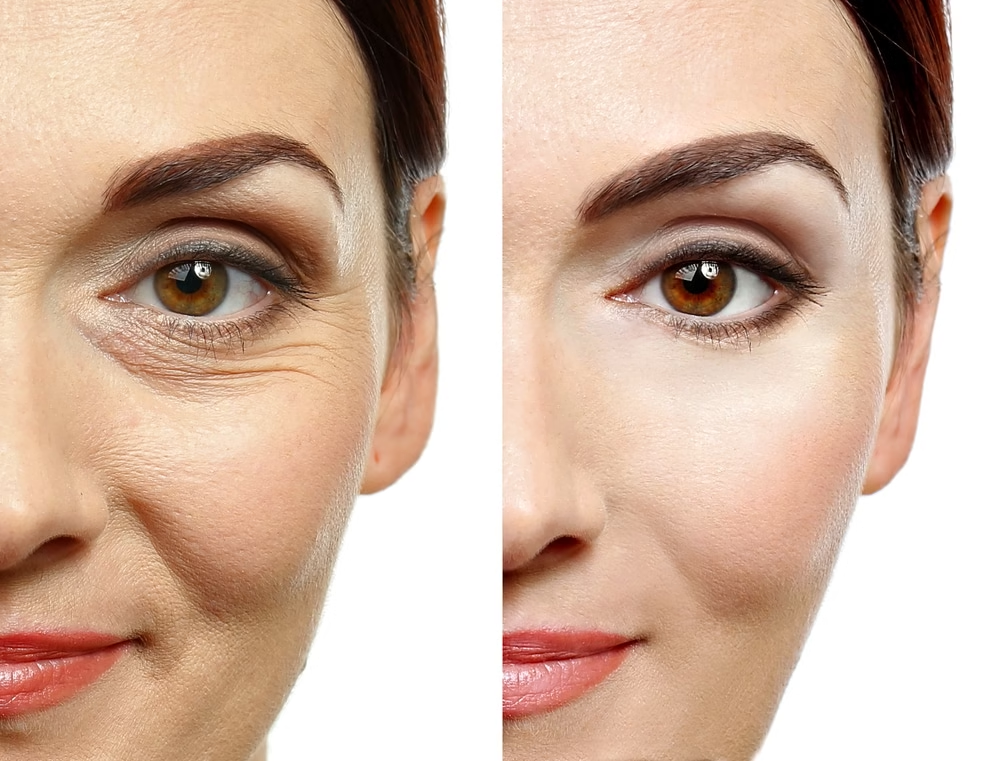
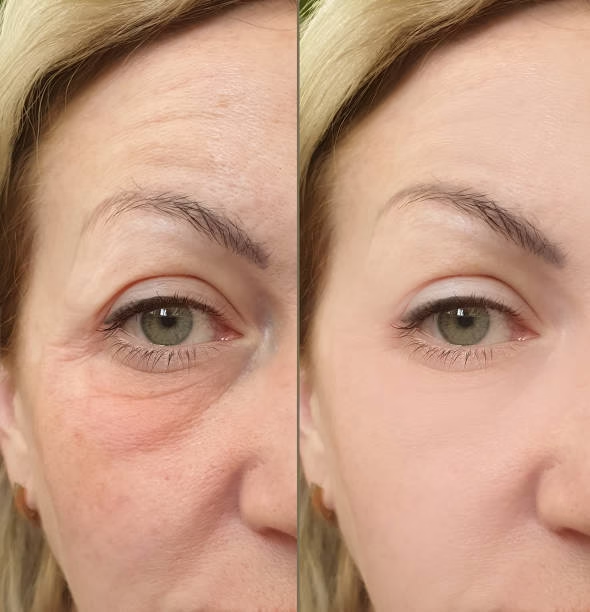
Botox has been used for decades to soften expression lines, and when it is performed appropriately, it does not stretch the skin. In fact, for many patients, Botox can help reduce the repetitive muscle movement that contributes to visible lines over time. But like any aesthetic treatment, it is important to understand what Botox can and cannot do.
This article breaks down the facts behind the most common skin damage fears, explains how Botox works, and helps you understand whether it is a good fit for your goals. If you are considering Botox in NYC, especially in a high-standard luxury practice, informed expectations matter just as much as the treatment itself.
Does Botox Damage Skin?
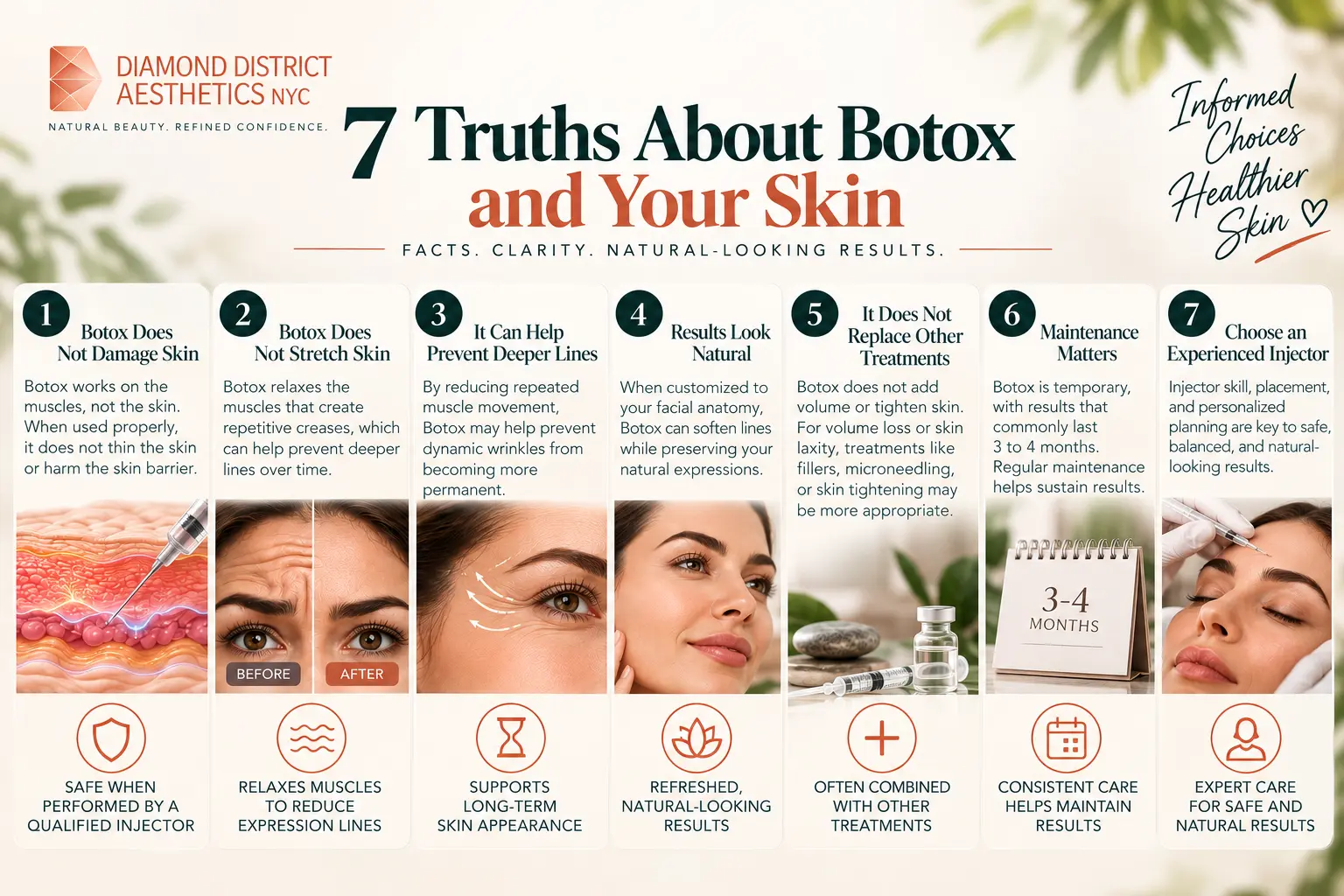
The short answer is no, Botox does not damage skin when used properly by a qualified injector.
Botox is a neuromodulator, which means it temporarily relaxes the muscles responsible for expression lines. It does not remove skin volume, thin the skin in a damaging way, or directly weaken the skin barrier. The treatment works below the surface by reducing muscle contraction, not by harming the skin itself.
The confusion often comes from how the face looks over time. If someone has very deep lines, long-standing sun damage, or poor skin quality, Botox alone may not fully erase those concerns. In those cases, the skin may still show signs of aging, which can lead people to assume the treatment caused the issue. More often, the underlying aging process was already present.
That said, Botox should always be used with precision. Overuse, poorly placed injections, or an overly aggressive treatment pattern can create an unnatural look. While that is not the same as skin damage, it can affect how healthy and balanced the face appears.
Will Botox Stretch My Skin?
Botox does not stretch your skin. In fact, it generally has the opposite effect by relaxing the muscles that repeatedly crease the skin during facial expressions.
The idea that Botox stretches skin usually comes from a misunderstanding of facial movement. When the muscles are active, they pull the skin into dynamic wrinkles. When those muscles relax, the skin is no longer folding in the same way. Over time, that can help prevent the deepening of expression lines.
Some people worry that if they stop Botox after using it for years, their skin will suddenly look looser or more stretched. This is not how the treatment works. What often happens is that the natural aging process resumes after Botox wears off, so the face returns to its baseline movement and line patterns. That baseline may look more noticeable simply because the person has aged in the meantime.
Why Do People Think Botox Causes Skin Damage?
There are a few reasons this myth persists.
First, people sometimes confuse Botox with fillers, lasers, or skin-tightening treatments. Botox does not add volume or tighten the skin directly, so if a patient expects it to do those things, they may feel disappointed.
Second, when Botox is placed incorrectly, the face can look flat or over-relaxed. That may create the impression of a changed or unhealthy appearance, even though the skin itself is not damaged.
Third, many patients are already noticing fine lines, dryness, pigment changes, or mild laxity before they start treatment. If those issues progress naturally over time, they may attribute the change to Botox when it is really part of the normal aging process.
Finally, social media has amplified a lot of fear-based messaging around injectables. In reality, Botox is one of the most studied aesthetic treatments in the world, and its safety profile is well established when it is used correctly.
What Botox Actually Does to the Skin?
Botox works on the muscles, but the benefits can indirectly improve how skin looks.
By softening repeated movement, Botox can help reduce the creasing that eventually
becomes more permanent. This is especially helpful in areas such as:
When expression lines are less active, the overlying skin gets a break from constant folding. For many patients, that means a smoother, more rested appearance.
Botox does not replace skincare, sun protection, or collagen-supporting treatments. But it can be an important part of a broader anti-aging plan, especially for patients who want a refined, natural look rather than a heavily treated one.
When Botox May Not Be the Right Standalone Solution?
Botox is excellent for dynamic wrinkles, but it is not the best treatment for every concern.
then Botox alone may not be enough.
In these cases, a consultation is essential. Depending on your skin type, age, and goals, a provider may recommend combining Botox with dermal fillers, laser resurfacing, microneedling, medical-grade skincare, or skin tightening treatments. This is often the most natural and effective approach.
Botox by Age: Prevention vs Correction
One of the most useful ways to think about Botox is by treatment goal, not just by age. Still, age can help guide expectations.
In Your 20s and Early 30s
For some patients, Botox is used preventively. The goal is not to erase deep wrinkles, but to reduce the repetitive movements that can cause them to form more quickly.
This approach may be appropriate for patients who already see early expression lines, especially in the forehead or between the brows. The key is subtle dosing. The aim should be to soften, not freeze.
In Your 30s to 40s
This is a common time to begin or continue Botox because lines often become more visible at rest. Patients at this stage may want a balance between prevention and correction.
Botox may help maintain a fresher look while reducing the worsening of fine lines. If skin texture or volume loss is also becoming more noticeable, combination treatment may be worth discussing.
In Your 50s and Beyond
Botox can still be highly effective in mature skin, but expectations should be realistic. It can soften movement-related wrinkles, but it will not reverse significant laxity or deeply etched static lines on its own.
For many older patients, Botox works best as part of a more comprehensive plan. That may include fillers, energy-based treatments, or advanced skincare strategies.
How Botox Compares With Other Anti-Aging Options?
Botox is often compared with other aesthetic treatments, but each option serves a different purpose. Understanding the differences can help you choose the right path.
| Treatment | Best For | Downtime | Longevity | Comfort | Main Tradeoff |
|---|---|---|---|---|---|
| Botox | Dynamic expression lines | Minimal | About 3 to 4 months | Quick, mild discomfort | Does not restore volume or tighten skin |
| Dermal Fillers | Volume loss and deeper folds | Minimal to moderate | 6 to 18 months | Mild discomfort | Can look overfilled if overdone |
| Laser Resurfacing | Texture, fine lines, sun damage | Moderate | Longer-term improvement with maintenance | Varies by treatment | More downtime than Botox |
| Microneedling | Texture and early collagen support | Minimal to moderate | Gradual improvement with series | Mild discomfort | Subtle results, not instant |
| Skin Tightening | Mild laxity | Minimal to moderate | Varies | Mild to moderate discomfort | Results are gradual and less predictable |
What to Expect After Botox?
Most patients notice that Botox starts working within a few days, with full results typically visible in about 10 to 14 days.
You should not expect your face to feel dramatically different in a bad way. A well-done Botox treatment should look soft, balanced, and natural. The goal is not to eliminate all movement. It is to reduce overactive contractions while preserving expression.
Common short-term effects include mild tenderness, slight swelling, or tiny injection marks. These are usually temporary.
If you are concerned about skin stretching or skin damage, it helps to focus on the bigger
picture. The quality of your result depends heavily on:
Maintenance and Long-Term Skin Health
Botox is not permanent, which is one of its advantages. Because the effects wear off gradually, the treatment can be adjusted over time as your face changes.
Some patients choose Botox every 3 to 4 months. Others extend their intervals slightly depending on how quickly their muscles recover movement. There is no universal schedule that works for everyone.
Long-term, many patients appreciate that Botox can reduce the repetitive “crease and deepen” cycle associated with expression lines. This does not mean it prevents all aging, but it can help slow visible wrinkling in treated areas.
For best results, Botox should be part of a broader skin health plan. That includes:
How to Know If You Are a Good Candidate?
You may be a good Botox candidate if you want to soften expression lines, look more rested, or prevent certain wrinkles from becoming more prominent.
You may want a more comprehensive consultation if you have significant skin laxity, advanced volume loss, or concerns about skin texture that Botox alone cannot address.
A thoughtful injector should evaluate not only where the wrinkles are, but also why they are forming. That level of analysis is especially important in a luxury NYC practice where patients expect individualized care and natural-looking outcomes.
The Role of Injector Skill
When patients ask, “Does Botox damage skin?” they are often really asking whether the treatment is safe in the right hands.
Skill matters. Facial anatomy is complex, and the artistry of Botox is in restraint as much as technique. A seasoned injector understands how to treat expression lines without over-weakening nearby muscles or creating an unnatural appearance.
This is why consultation matters so much. The right provider will talk through your goals, review your muscle movement, assess your skin quality, and recommend a treatment plan that fits your face rather than a one-size-fits-all template.
Frequently Asked Questions About Botox
Conclusion
Botox does not stretch your skin, and when performed properly, it does not damage skin either. The treatment works by relaxing facial muscles that repeatedly crease the skin, which can help soften lines and support a smoother appearance over time.
The most important factor is using Botox in the right way for your face, your age, and your skin goals. For some patients, it is an excellent standalone treatment. For others, it works best as part of a broader aesthetic plan that also addresses texture, volume, and skin quality.
If you are looking for a refined, natural approach to Botox in NYC, the consultation process should feel educational, thoughtful, and personalized.
If you are considering a workday-friendly treatment
If you are considering Botox and want a clear, honest assessment of what it can do for your skin, Diamond District Aesthetics NYC is here to help. Our team takes a personalized approach to facial balance, wrinkle softening, and long-term skin health in a luxury setting designed for comfort and discretion.
Schedule a consultation to discuss whether Botox is the right option for your goals, and receive a treatment plan tailored to your features, your lifestyle, and your expectations.