Sun-Damaged Skin After Summer? 5 Powerful sun damage skin Injectables Treatments for Radiant Results
Summer in New York City can leave skin looking a little tired by September. Even with diligent sunscreen use, months of UV exposure often show up as fine lines, uneven tone, early laxity, and a loss of facial volume that makes the complexion appear less rested. For many patients, the question is not only how to repair the visible effects of sun damage, but how to do it in a way that still looks elegant, natural, and refreshed.
That is where sun damage skin injectables can play a meaningful role. When used thoughtfully, injectables may help soften etched lines, restore youthful contours, and improve the appearance of photoaging without the downtime associated with more aggressive procedures. The key is choosing the right treatment for the right concern.
This guide explains how photoaging develops, which injectable treatments can help, who may benefit most, and how to compare options after a long summer in NYC.
What Sun Damage Does to the Skin?
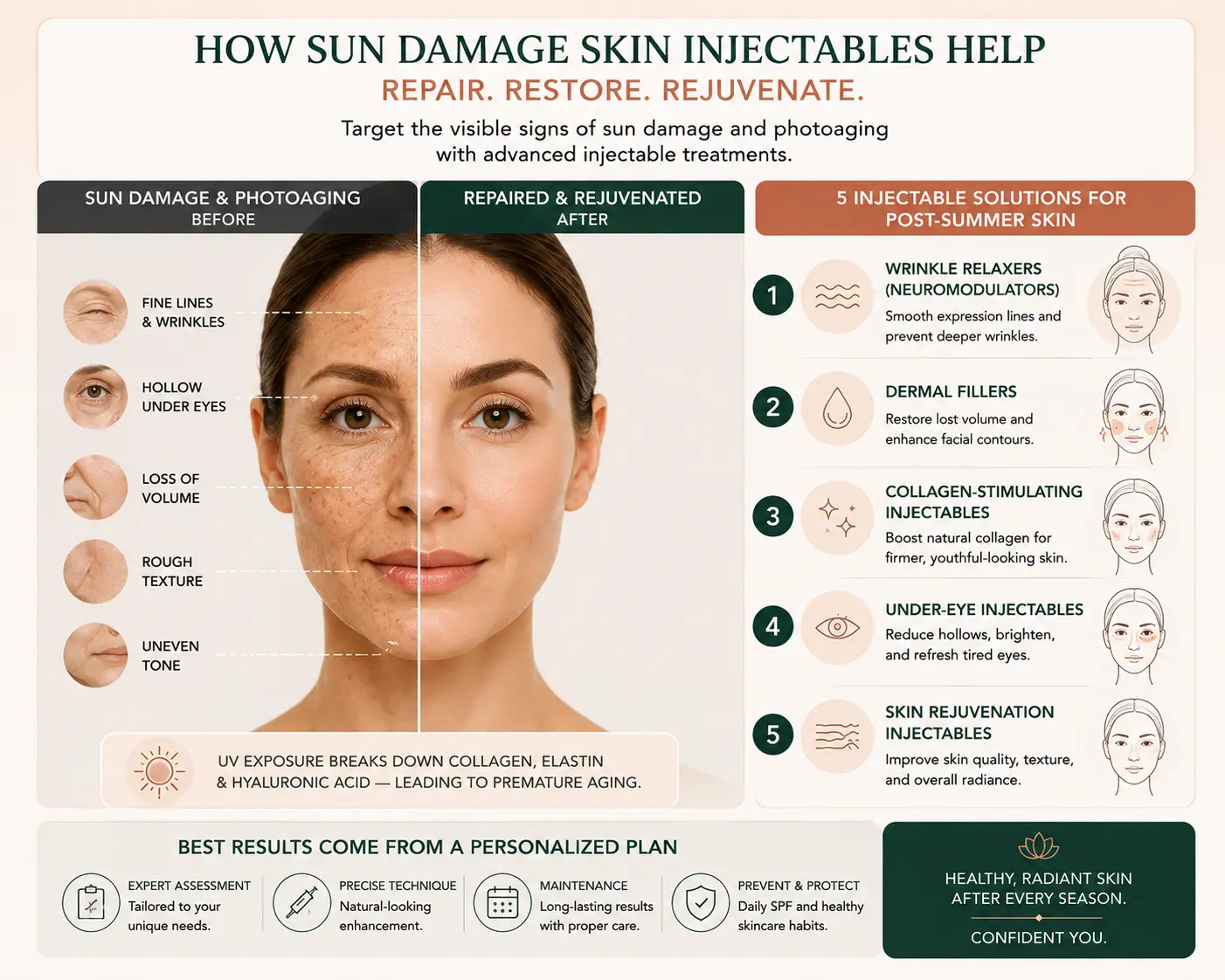
Photoaging is the term used for skin changes caused by repeated ultraviolet exposure. While a tan may fade after summer, the biological effects of sun exposure can linger much longer. Over time, UV radiation breaks down collagen and elastin, reduces skin resilience, and can make fine lines more visible.
Common signs of photoaging include:
It is important to note that injectables do not reverse every effect of sun exposure. They are best used as part of a broader photoaging treatment plan that may also include sunscreen, antioxidants, resurfacing, and medical-grade skincare.
Why Are Injectables a Popular Post-Summer Option?
For patients seeking a refreshed look after months of UV exposure, injectables can address both structural and expression-related concerns. They are especially useful when the main issues are volume loss, wrinkles, and tired facial contours rather than widespread skin damage.
The appeal of injectables for photoaging treatment lies in their versatility. Depending on the product and technique, they can:
At Diamond District Aesthetics NYC, the most effective plans are usually subtle and customised. The goal is not to change the face, but to restore what sun exposure and time may have diminished.
The Main Sun Damage Skin Injectables to Consider
Neuromodulators for Fine Lines and Expression Wrinkles:
Neuromodulators, often referred to as wrinkle relaxers, are a common choice for forehead lines, crow’s feet, and frown lines. These treatments temporarily reduce the muscle activity that creates repeated creasing, which can help the skin look smoother and more rested.
For sun-exposed skin, neuromodulators can be useful when photoaging has made
expression lines more pronounced. They are often a strong option for patients in their 30s to 50s who want prevention and refinement rather than dramatic change.
Dermal Fillers for Volume Loss and Facial Contours:
Dermal fillers are among the most effective sun damage skin injectables for restoring the support that photoaged skin often loses. Hyaluronic acid fillers can replenish volume in areas such as the cheeks, temples, under-eyes, and jawline, creating a more rested appearance.
For patients whose skin looks deflated after summer, fillers may help address:
When placed conservatively, fillers can support a softer, more lifted look without overfilling the face. In a luxury practice setting like Diamond District Aesthetics NYC, the emphasis should always be on proportion, balance, and restraint.
Biostimulatory Injectables for Collagen Support:
Some injectables are designed not just to add immediate volume, but to stimulate the body’s own collagen production over time. These are often considered in patients with early skin laxity or generalized thinning associated with photoaging.
Biostimulatory treatments may be helpful when a patient wants gradual improvement in texture and firmness rather than an instant volumizing result. They can be a strong option for more mature skin or for patients seeking longer-term structural support.
Under-Eye Injectables for Tired-Looking Skin:
The under-eye area often shows sun damage early because the skin is thin and delicate. If summer leaves you looking fatigued despite adequate rest, under-eye filler or carefully selected regenerative treatments may help reduce shadowing and hollowing.
That said, this is one of the most technique-sensitive areas in aesthetic medicine. Not every patient is a candidate. A thoughtful consultation is essential, especially if there is puffiness, fluid retention, or significant skin laxity.
Which Injectable Is Best for Which Concern?
Common Concern and Treatment Match:
For many patients, the best outcome comes from combining treatments rather than relying on a single product.
| Concern | Best Injectable Option | Downtime | Typical Longevity | Best For |
|---|---|---|---|---|
| Forehead lines and crow’s feet | Neuromodulator | Minimal | 3 to 4 months | Dynamic wrinkles |
| Cheek hollowing | Dermal filler | Minimal to mild | 6 to 18 months | Volume restoration |
| Under-eye shadows | Tear trough filler | Mild | 6 to 12 months | Hollowing and tired appearance |
| Early skin laxity | Biostimulatory injectable | Minimal to mild | 12 months or longer | Collagen support |
| Deep facial creasing | Filler plus neuromodulator | Minimal to mild | Varies by product | Combination photoaging concerns |
Treatment Comparison: Prevention vs Correction
One of the most useful ways to think about photoaging treatment is whether the goal is prevention or correction.
Prevention Focused Care
Younger patients in their late 20s or 30s often do best with subtle, preventive strategies. This may include neuromodulators, limited filler, sunscreen, and high-quality skincare. The aim is to slow the visible effects of repeated sun exposure before lines and volume loss become more established.
Correction Focused Care
Patients in their 40s, 50s, and beyond may need more restorative treatment. This can include volume replacement, support for facial contours, and selective collagen-stimulating injectables. For these patients, the plan often focuses on bringing back balance and freshness rather than making the face look obviously treated.
How to Choose the Right Option?
There is no single best injectable for all forms of sun damage. The right approach depends on age, anatomy, skin quality, and how much change you want to see.
A practical way to decide:
Patients in NYC often prefer a phased approach. That might mean starting with a consultation, treating the most visible concern first, and building a maintenance plan over time rather than doing everything at once.
What to Expect During Consultation and Treatment?
A strong consultation is especially important for photoaging treatment because not all sun damage is appropriate for injectables alone. At Diamond District Aesthetics NYC, a careful assessment should include facial structure, skin quality, areas of volume loss, and the patient’s preferred level of change.
Treatment sessions are usually efficient. Depending on the injectable used, you may have temporary swelling, bruising, or tenderness. Most patients return to normal activities quickly, although the under-eye area and deeper filler treatments may require a little more caution.
Comfort, Downtime, and Maintenance
When comparing sun damage skin injectables, it helps to think beyond the immediate result.
Comfort:
Neuromodulators are usually very quick and well tolerated. Filler injections can feel more involved, especially in sensitive areas like the lips or under-eyes. Some products include lidocaine to improve comfort, and topical numbing may be used when appropriate.
Downtime:
Most injectable treatments involve little downtime, but bruising and swelling are always possible. Patients who have a major event coming up should plan accordingly.
Maintenance:
For patients who want a polished look year-round in NYC, maintenance planning is often just as important as the initial treatment.
Realistic Expectations for Post-Summer Repair
Injectables can make a meaningful difference in how photoaged skin looks, but they do not erase every sign of sun exposure. They also do not replace foundational skin care or sun protection.
A responsible provider should explain both the benefits and the limitations before treatment. That honesty is part of achieving elegant, trustworthy results.
How to Support Injectable Results After Summer?
Injectables work best when paired with consistent skin habits. To support your results:
If your skin also has pigment concerns, rough texture, or visible sunspots, your injector may suggest combining injectables with laser treatments, chemical peels, or medical-grade skincare.
Conclusion
Post-summer skin repair is not only about correcting what sun exposure has made visible. It is also about choosing the right treatments for your face, your skin quality, and your long-term aesthetic goals. Sun damage skin injectables can be an elegant part of a photoaging treatment plan, especially when the goal is to soften lines, restore volume, and support a more rested, polished appearance.
The best results come from precise assessment, conservative technique, and a treatment plan tailored to the individual. For many NYC patients, that means combining injectables with strong skincare habits and a long-term prevention strategy.
Frequently Asked Questions About Injectables
If you are considering injectables based photoaging treatment
If you are noticing the effects of summer sun on your skin, Diamond District Aesthetics NYC offers thoughtful consultations for injectable-based photoaging treatment. Our approach is personalized, medically responsible, and designed to help you understand which options best match your concerns, whether that involves fine lines, volume loss, or overall facial rejuvenation.
Schedule a consultation to discuss your skin goals and explore a refined treatment plan built around your needs, your timeline, and your lifestyle.