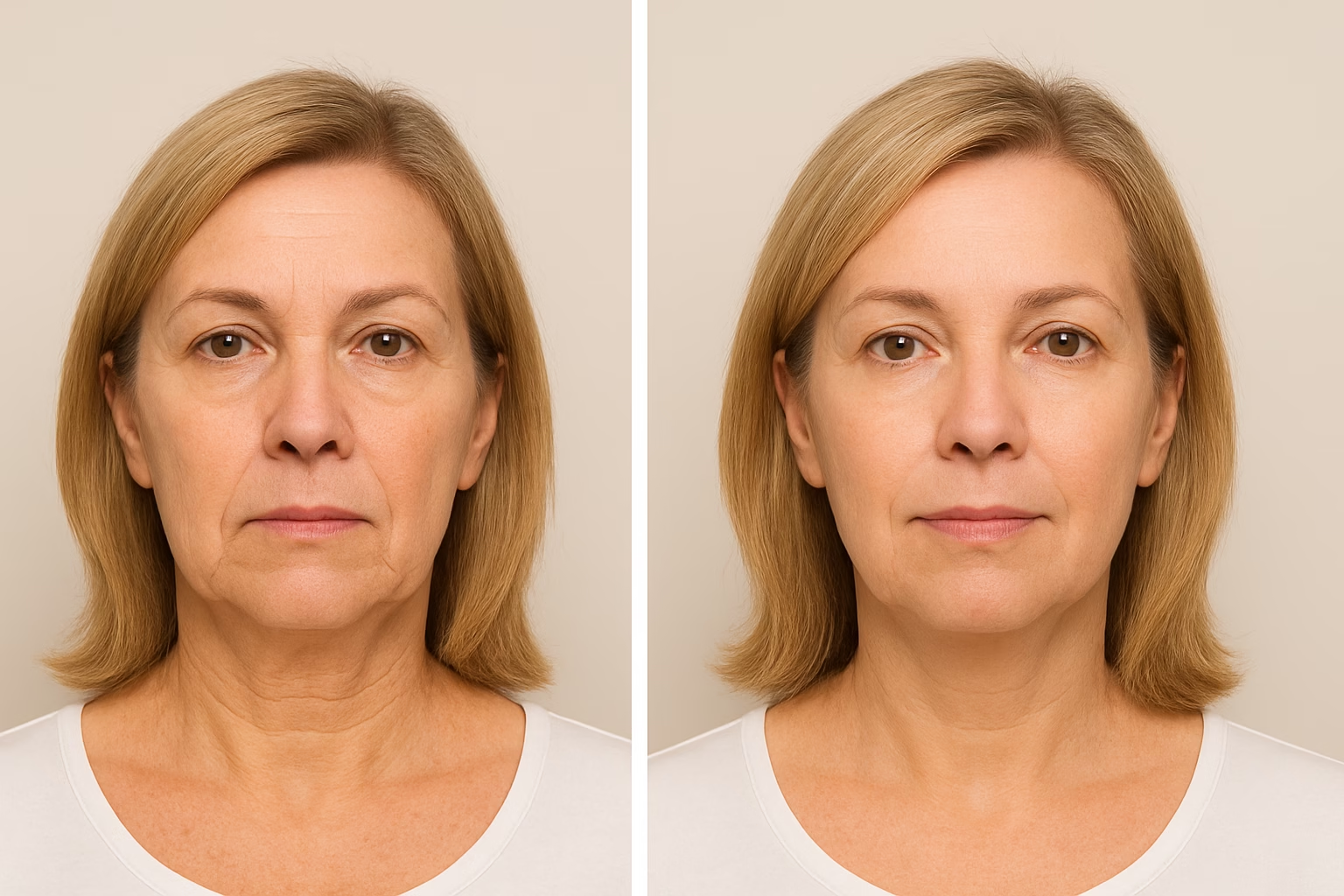
Best Dermal Fillers in NYC are a popular choice for patients seeking non-surgical facial rejuvenation, volume restoration, and refined facial contours. When used thoughtfully, dermal fillers can soften lines, restore lost volume, enhance facial balance, and create a more refreshed appearance without surgery or significant downtime. However, not all fillers are the same.
Different filler materials vary in their composition, longevity, flexibility, and ideal treatment areas. Understanding these differences is important when deciding which option may be best suited to your aesthetic goals and facial anatomy.
Understanding dermal fillers hyaluronic acid, filler types is essential before deciding whether treatment is right for you. Different filler materials behave differently in the skin, last for different lengths of time, and are better suited to certain areas of the face. The right choice depends on your anatomy, goals, and how natural you want the result to look.
At Diamond District Aesthetics NYC, we believe informed patients make the best decisions. This guide explains the major filler types, how long they typically last, what they are best used for, and how to think through the tradeoffs before booking treatment in New York City.
What Are Dermal Fillers?
Dermal fillers are injectable treatments designed to add volume, support tissue, and improve facial definition. Unlike neuromodulators, which relax muscle movement, fillers work by physically replacing volume or stimulating collagen production depending on the product used.
Most patients think of fillers as a way to treat lips or wrinkles, but their uses are broader than that. Fillers can help with:
The best results usually look subtle. A well-placed filler treatment should not make someone look “done.” Instead, it should make the face look more refreshed, lifted, and harmonious.
Dermal Fillers – Hyaluronic Acid Fillers, Filler Types Explained
The most common starting point for understanding dermal fillers is hyaluronic acid, often abbreviated as HA. Hyaluronic acid is a sugar molecule naturally found in the body. It attracts water, helping skin appear hydrated and plump.
Because HA is already familiar to the body, HA fillers are widely used and often favored for their versatility and reversibility. If needed, many hyaluronic acid fillers can be dissolved with an enzyme called hyaluronidase. That flexibility makes them especially popular for first-time patients and for areas where precision matters.
That said, HA is only one category. Several other filler types exist, and each has distinct strengths.
Best Dermal Fillers in NYC

Hyaluronic Acid Fillers:
Hyaluronic acid fillers are the most commonly used filler type in aesthetic medicine. They are available in different formulations, which vary in thickness, softness, and lift capacity. That makes them useful for a range of concerns.
For many patients seeking dermal fillers hyaluronic acid, filler types are the most approachable option because they offer precision and a safety net if adjustments are needed.
Calcium Hydroxylapatite Fillers:
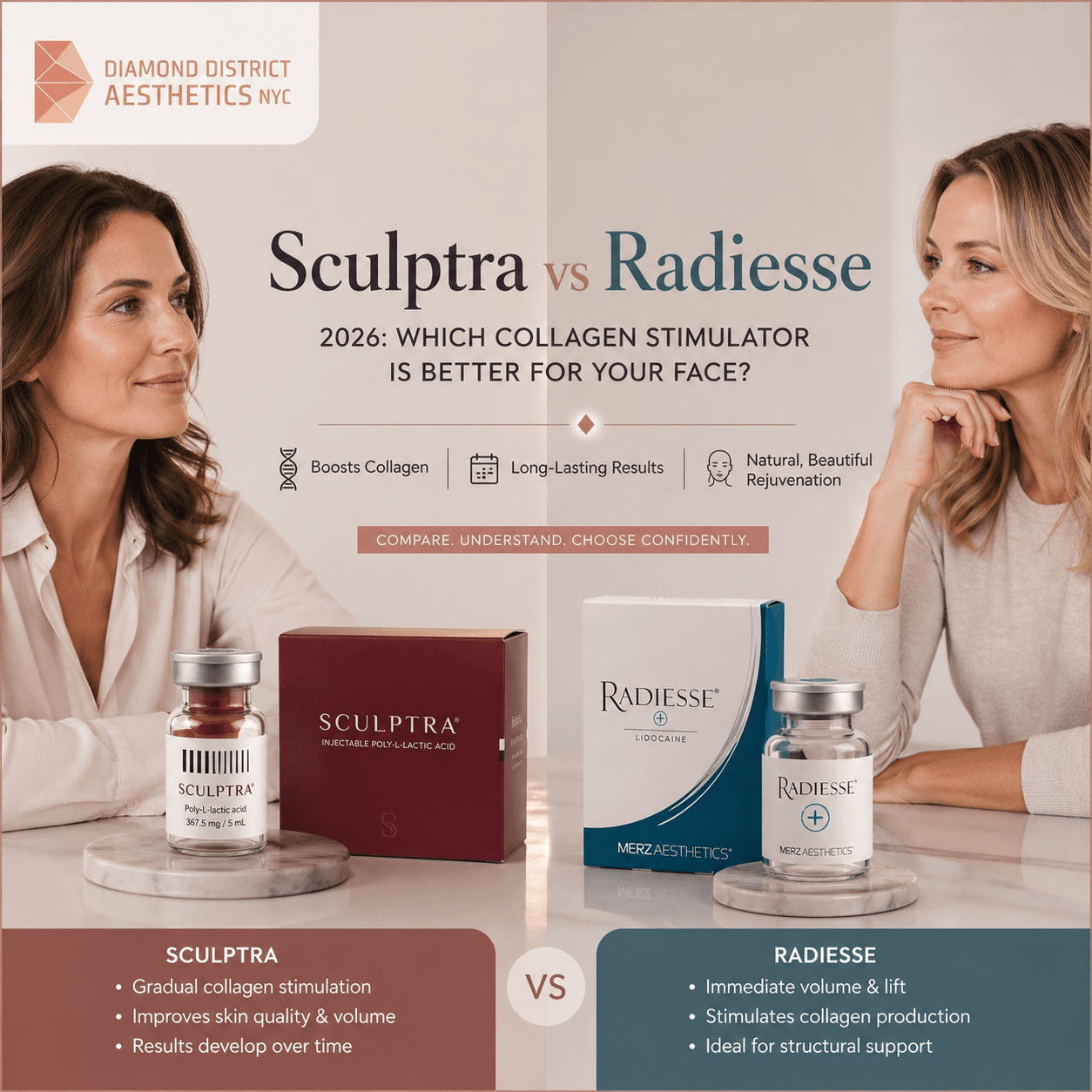
Calcium hydroxylapatite, often known by one of its brand names, is a thicker filler that also stimulates collagen production over time. It is commonly used for deeper folds and structural support.
Poly-L-Lactic Acid Fillers:
Poly-L-lactic acid is a collagen stimulating injectable rather than a traditional volume filler. It works gradually, helping the body rebuild collagen over time. Because of this, results appear slowly rather than immediately.
Polymethylmethacrylate Fillers:
Polymethylmethacrylate, or PMMA, is a more permanent filler option. It is not commonly chosen for routine facial enhancement in the same way HA fillers are. Because it is long-lasting, it requires very careful patient selection.
How Long Do Dermal Fillers Last?
Filler longevity depends on the product, treatment area, injection depth, metabolism, and how much movement that area gets day to day. There is no single timeline that applies to everyone.
Here is a practical overview:
Areas with frequent movement, such as the lips, tend to break down filler faster. Areas with more structural support, like the cheeks and chin, often retain product longer.
Metabolism also matters. Some patients naturally absorb filler faster than others. Lifestyle factors, exercise habits, and individual biology can all influence how long the result lasts.
Best Uses by Area
Lips:
Lip filler is one of the most requested treatments in New York City. The goal is usually not simply more volume. In many cases, patients want improved shape, hydration, symmetry, or definition.
Cheeks
Cheek filler can restore youthful support to the midface and improve facial balance. In the right patient, it can also soften lines around the nose and mouth by lifting the tissues above.
Under Eyes:
Under-eye filler can be helpful for hollowing in carefully selected patients, but this area requires advanced judgment. Not everyone is a good candidate. If puffiness, fluid retention, or prominent under-eye bags are the primary concern, filler may not be the right solution.
Jawline and Chin:
Jawline and chin filler can improve lower-face definition, sharpen angles, and create better proportion. These are often structural treatments rather than soft enhancement treatments.
Smile Lines and Marionette Lines:
These lines often improve when the face is lifted and volume is restored, rather than when the fold itself is simply filled. A skilled injector looks at the whole face, not just one crease.
| Filler Type | Typical Longevity | Best Uses | Reversible | Downtime | Comfort |
|---|---|---|---|---|---|
| Hyaluronic Acid | 6 to 18 months | Lips, cheeks, under eyes, smile lines | Yes, Often | Low | Well Tolerated |
| Calcium Hydroxylapatite | 12 to 24 months | Cheeks, jawline, deeper folds | No | Low to Moderate | Moderate |
| Poly-L-Lactic Acid | 18 to 24+ months | Gradual facial volume restoration | No | Low | Moderate |
| PMMA | Long-lasting | Selected deep wrinkle correction | No | Low to Moderate | Moderate |
How to Choose the Right Option?
If you are comparing filler types, the right choice depends on your goal more than on popularity.
For many people, the best results come from a customized combination approach rather than a single syringe in one spot.
Cost vs Longevity: What Patients Should Know?
When comparing filler options, it is tempting to focus on price alone. A better question is how long the result lasts and how much product is needed to reach the desired outcome.
In general:
The cheapest option is not always the best value if it needs repeated correction sooner than expected. Likewise, the most expensive option is not automatically the best fit if your goal is subtle, reversible enhancement.
Downtime and Recovery Expectations
Most filler treatments involve minimal downtime, but there can still be temporary effects.
Common short-term effects include:
In the lips and under eyes, swelling can be more noticeable. This is normal in many cases and usually improves over days to two weeks depending on the area and product used.
Patients should avoid making judgment calls too early. Final filler results often settle after swelling resolves.
Maintenance and Prevention vs Correction
In many NYC patients, the best long-term strategy is gradual maintenance rather than large, infrequent corrections. This approach often looks more natural and helps avoid an overfilled appearance.
Safety and Realistic Expectations
Dermal fillers are widely used, but they are still medical procedures. Results depend heavily on injector skill, facial anatomy, and proper product selection.
Patients should understand:
A thoughtful consultation should include your medical history, previous injectable experience, facial proportions, and goals. That is especially important in a luxury market like NYC, where patients often want polished results without obvious signs of treatment.
Conclusion
Dermal fillers offer a versatile way to restore volume, define features, and support a refreshed appearance without surgery. But understanding dermal fillers and hyaluronic acid filler types is the key to choosing the right product and setting realistic expectations.
Hyaluronic acid fillers remain the most flexible option for many patients, especially when reversibility and precision matter. Other filler types can be useful when the goal is longer-lasting support or gradual collagen stimulation. The best choice depends on your anatomy, goals, and the area being treated.
For patients in New York City, where subtlety and refinement are often the priority, a carefully tailored injectable plan can make a meaningful difference while still looking natural.
Frequently Asked Questions
Ready to Refresh Your Look?
At Diamond District Aesthetics NYC offers thoughtful, medically guided consultations in a luxury setting. Our team can help you compare filler types, understand expected longevity, and choose a plan that feels refined and appropriate for your features. Contact us to schedule a consultation and learn which treatment approach may be the best fit for you.
If you are considering dermal fillers and want guidance tailored to your facial anatomy and goals,